CENIEH takes part in a study that places the arrival of North African–origin Acheulean technology in the Iberian Peninsula at around 700,000 years ago. The finds, documented at the site of Revilleja de Valparaíso (Hortigüela, Burgos), push back by 200,000 years the earliest known evidence of this technological tradition and redefine models concerning the origin and diversity of the European Acheulean
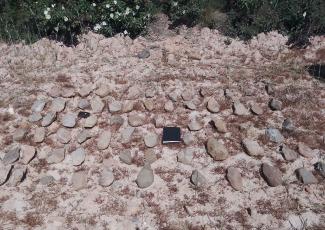
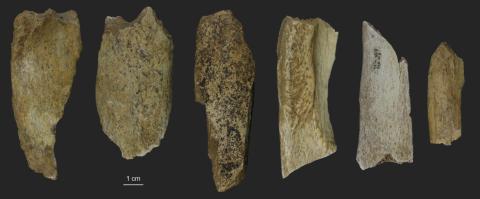
Members of the Atapuerca Research Team from the Institut Català de Paleoecologia Humana i Evolució Social (IPHES), the Centro Nacional de Investigación sobre la Evolución Humana (CENIEH), the University of Burgos, and the Centre Européen de Recherche et d’Enseignement des Géosciences de l’Environnement (CEREGE) are involved in a study published in Quaternary Science Reviews reporting the earliest known evidence of the classic Acheulean in the Iberian Peninsula. The study is based on the discovery of thirteen lithic artefacts knapped approximately 700,000 years ago at the site of Revilleja de Valparaíso, in Hortigüela (Burgos), pushing back by around 200,000 years the previously accepted chronology for these technological traditions.
The paper, led by Francisco-Javier García-Vadillo and Eudald Carbonell (IPHES–CERCA and Fundación Atapuerca), demonstrates that hominin groups bearing Acheulean technological traditions closely related to those of North Africa were already present in the Iberian Peninsula 700,000 years ago. These assemblages, referred to as the Large Flake Acheulean, are characterised by the production of large cutting tools (LCTs) such as handaxes, cleavers, and picks, generally manufactured on large flakes and often displaying symmetrical morphologies.
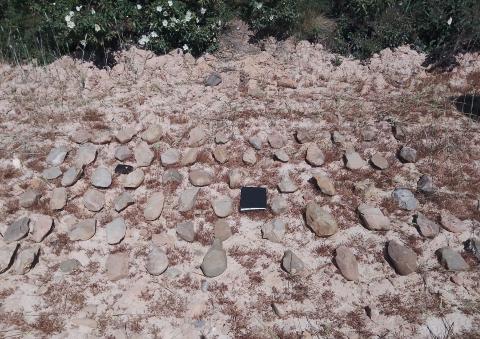
The artefacts were recovered from an ancient fluvial channel of the Arlanza River at Cerro de La Revilleja. “This sector of the Arlanza River valley constituted a palaeotopographic corridor for Palaeolithic populations, connecting with the Arlanzón River valley and the Sierra de Atapuerca through the Tierra de Lara region,” explains CENIEH geologist Alfonso Benito.
The discovery stems from excavation campaigns carried out in 2021 and 2022, promoted by the Fundación Atapuerca and involving a multidisciplinary team from institutions including IPHES-CERCA (URV), CENIEH, CEREGE-CNRS, the Museum of Human Evolution (MEH), the University of Burgos (UBU), and other research groups. A key role was played by the initial identification of materials by Gerardo López, a resident of Salas de los Infantes, whose collection drew scientific attention to the site.
Dating
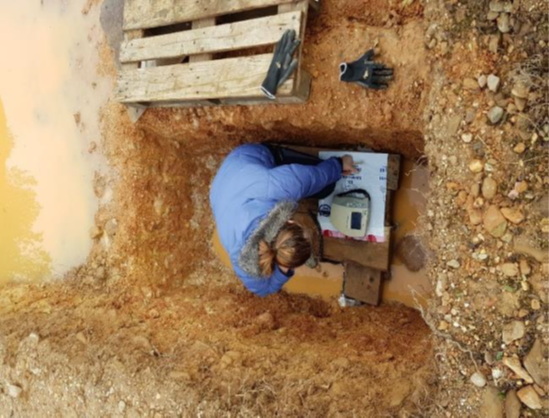
The age of the site has been established using Electron Spin Resonance (ESR) and cosmogenic nuclide dating. The resulting ages exceed those reported for classic sites such as Sima de los Huesos and Galería (Atapuerca, Burgos) or Gruta da Aroeira (Portugal). Until now, it was generally assumed that these technologies did not appear in the Iberian Peninsula before around 450,000 years ago.
“In the ESR dating, it is particularly noteworthy that the ages obtained from different paramagnetic centres converge around 700,000 years. This is uncommon and strongly supports the robustness of the result,” says geochronologist Davinia Moreno.
A shift in models of Acheulean origins
The data from Revilleja de Valparaíso represent a significant advance in understanding human settlement during the Middle Pleistocene in Europe. For the first time, a fully developed Acheulean with the characteristic features of the Iberian record is documented, supporting the hypothesis of an early arrival of cultural influences from North Africa via the Strait of Gibraltar.
This finding also refines current interpretations of the European Acheulean, which have largely relied on sites in France and Italy with comparable chronologies. In contrast, the Iberian record shows a distinct technological signature, marked by the systematic production and use of large flakes and by the presence of characteristic tools such as cleavers.
Cultural diversity in Western Europe
The study reinforces the idea that Western Europe was a culturally diverse region 700,000 years ago, where different hominin populations developed and maintained distinct technological traditions within the broader Acheulean framework. In the Iberian Peninsula, these traditions show strong affinities with North African assemblages, whereas regions north of the Pyrenees exhibit influences linked to eastern European contexts.
This technological diversity may have been key to the long-term success of human settlement in Europe, allowing different groups to adapt to varied environments while maintaining stable cultural traditions over time.
The site of Revilleja de Valparaíso thus becomes a key reference for understanding when and how the earliest Acheulean technological traditions emerged in the Iberian Peninsula, and how they fit within the broader framework of hominin cultural evolution in Europe.