A new study has identified more than 60 bone tools at a classic site in southwestern France, shedding light on the sophisticated ways Neanderthals repurposed animal remains for technical use.
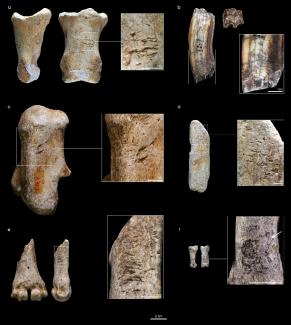
An international team led by Edgar Téllez (CENIEH) has carried out the first systematic study of Neanderthal bone tool production at the Abri Suard site (Charente, southwestern France). Published in the Journal of Paleolithic Archaeology the research documents at least 62 retouchers and 3 soft hammers made from bone, among over 6,000 faunal remains analyzed.
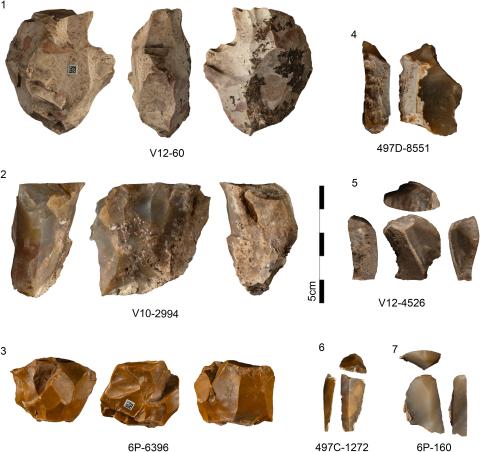
Retouchers are bone fragments used to refine the edges of stone tools, while soft hammers allow greater control in flake removal. Both tool types bear distinctive wear patterns and impact marks that confirm their function. At Abri Suard, most show traces consistent with working flint and quartzite—the main raw materials used for stone tools at the site.
These implements were primarily made from reindeer and horse bones, and in some cases from woolly rhinoceros remains. Many specimens display cut marks and fractures linked to the extraction of meat and marrow, indicating that bones were often recycled into tools after their initial use as food resources.
Rhinoceros bones and horse teeth as tools
Among the most striking discoveries is the identification of soft hammers made from rhinoceros bones—a rare occurrence in European Paleolithic bone industries. Their presence points to deliberate technical choices, likely exploiting the strength and density of these large bones to withstand heavy impacts.
Another notable find is a retoucher made from a horse molar. This represents one of the earliest known examples of such a tool. Recent experimental studies suggest that teeth are particularly effective for retouching flint, consistent with the wear traces observed on this specimen.
The analysis also shows that Neanderthals at Abri Suard preferentially selected long bones, phalanges, and calcanei—skeletal elements offering favorable mechanical properties and a stable grip during use. This pattern does not appear random, reinforcing the idea of careful and versatile management of available animal resources.
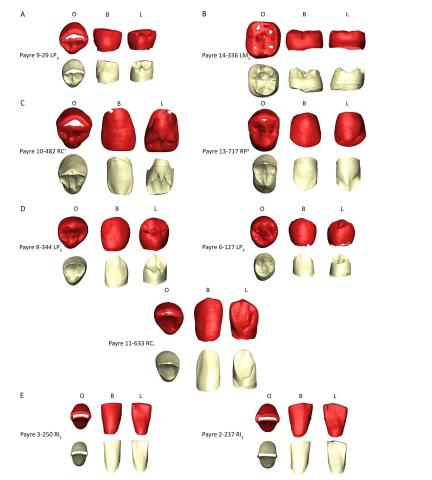
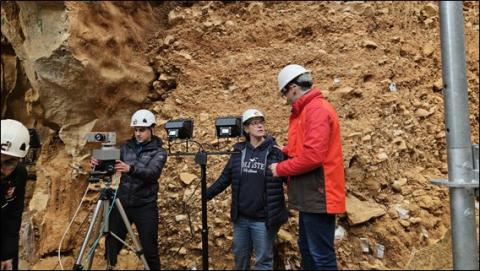
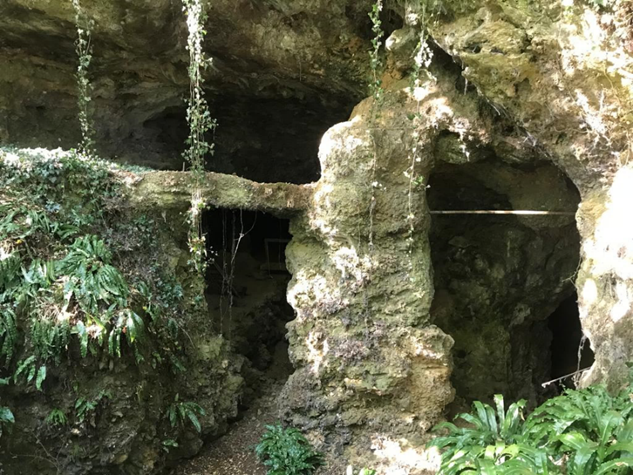
Abri Suard is part of the La Chaise-de-Vouthon karst complex and has been known since the late 19th century. Since the early 20th century, its stratigraphic sequence has yielded Neanderthal human remains from several adult and juvenile individuals. A new international team coordinated by the University of Bordeaux has recently resumed excavation and research at the site.
Until now, bone tools from Abri Suard had not been studied in detail. This new research integrates zooarchaeological, taphonomic, and technological data, placing the site among a growing number of European Middle Paleolithic contexts that document intensive and technically specialized use of bone by Neanderthals.
Overall, the findings suggest that the same animals provided meat, marrow, and raw materials for tool production. Rather than opportunistic reuse, the bone industry at Abri Suard reflects planned behavior and highlights the remarkable technical adaptability of some of the earliest Neanderthal populations in Western Europe.
This study involved collaboration with researchers from several institutions, including the PACEA laboratory (University of Bordeaux), the Laboratoire de Géographie Physique (CNRS–Université Paris 1), the Institute of Archaeology–Mérida, the Institut Català de Paleoecologia Humana i Evolució Social, Aranzadi Zientzia Elkartea, and CENIEH.
The research was funded by the European Research Council (Grant No. 949330), the Musée d’Angoulême, and the Service Régional de l’Archéologie–Nouvelle Aquitaine.